Table of Contents
Toggle1. What Is ADHD?
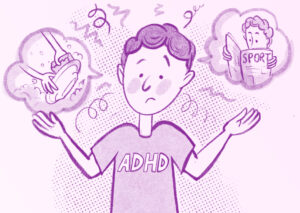
ADHD is the abbreviation for Attention Deficit Hyperactivity Disorder. The ADHD full form describes a condition involving persistent patterns of inattention, hyperactivity, and impulsivity that interfere with functioning or development. When asking what is ADHD?, the most accurate answer is that it is a neurodevelopmental disorder affecting how the brain regulates attention, activity levels, and self-control.
The ADHD meaning extends beyond simple distraction or restlessness. It refers to measurable differences in how certain brain systems develop and function, particularly those involved in executive control. Because these differences emerge early in life and influence developmental pathways, ADHD is classified among neurodevelopmental conditions rather than mood or personality disorders.
Clinically, attention deficit hyperactivity disorder reflects difficulty with regulating mental focus and behavioral inhibition rather than an absence of intelligence or effort. Individuals with ADHD can concentrate intensely under specific conditions, but sustaining attention consistently, especially for routine or non-stimulating tasks becomes disproportionately challenging.
2. Understanding ADHD Beyond the Label
ADHD is often misunderstood as a problem of “not paying attention.” In reality, it is a disorder of attention regulation, not attention capacity. The brain systems responsible for prioritising, sustaining, shifting, and inhibiting attention operate differently. As a result, focus may fluctuate dramatically depending on interest, urgency, or stimulation.
At the core of ADHD lies executive functioning. Executive functions include planning, working memory, task initiation, impulse control, and emotional regulation. When these regulatory systems are less efficient, daily activities such as organising assignments, completing work projects, or managing time require significantly more effort.
Neurologically, research points to differences in circuits involving the prefrontal cortex and its connections to deeper brain structures. These networks rely heavily on neurotransmitters such as dopamine and norepinephrine, which modulate motivation, reward sensitivity, and sustained attention. In ADHD, these signaling systems operate with altered efficiency, making it harder to maintain consistent cognitive control without external structure or stimulation.
3. Core Symptoms of ADHD Explained in Context
ADHD symptoms fall into three broad domains: inattention, hyperactivity, and impulsivity. These categories help clinicians organise patterns of behaviour, but in practice, symptoms overlap and influence one another.
Inattention
Common signs include:
Difficulty sustaining attention in tasks
Frequent careless mistakes
Disorganisation
Avoidance of effortful mental tasks
Forgetfulness in daily activities
Inattention in ADHD is not simply daydreaming. It reflects inconsistent regulation of focus. A student may understand concepts well but repeatedly forget to submit assignments. An adult may begin projects enthusiastically but struggle to complete them due to shifting attention. The underlying mechanism involves impaired working memory and reduced capacity to filter distractions.
Hyperactivity
Typical manifestations include:
Excessive fidgeting
Difficulty remaining seated
Feeling internally restless
Talking excessively
Hyperactivity in children may appear as constant movement. In adolescents and adults, it often becomes internalised, experienced as mental restlessness rather than visible overactivity. This shift explains why ADHD can appear to “improve” physically with age while cognitive symptoms persist.
Impulsivity
Features often include:
Interrupting others
Difficulty waiting turns
Acting without considering consequences
Rapid decision-making without adequate evaluation
Impulsivity arises from weakened inhibitory control. The brain’s braking system does not activate quickly enough, leading to premature actions or comments. This can affect academic performance, workplace decisions, and interpersonal relationships.
4. Types of ADHD (Clinical Presentations)
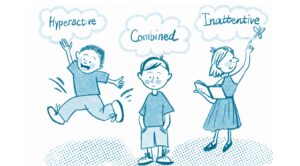
ADHD is classified into three clinical presentations based on dominant symptom patterns.
- Predominantly Inattentive Presentation involves significant attention regulation difficulties with minimal hyperactive behaviour. Individuals may appear quiet yet disorganised, forgetful, and mentally scattered. Historically, this was referred to as “ADD,” but that term is outdated. Current diagnostic systems recognise all forms under the umbrella of ADHD.
- Predominantly Hyperactive-Impulsive Presentation is characterised by pronounced restlessness and impulsivity with fewer inattentive symptoms. It is more commonly identified in early childhood.
- Combined Presentation includes substantial symptoms across all three domains. This is the most frequently diagnosed type.
These categories are descriptive rather than fixed identities. Symptom expression may evolve over time, and presentations can shift across developmental stages.
5. What Causes ADHD?
ADHD arises from a combination of genetic and neurobiological factors. Family studies consistently show strong heritability, indicating that attention deficit hyperactivity disorder frequently runs in families. No single gene causes ADHD; instead, multiple genes contribute small effects that influence brain development.
Brain imaging studies suggest differences in networks responsible for executive control, reward processing, and motivation. Dopamine-related pathways play a central role because they help regulate focus, effort allocation, and reinforcement learning. When dopamine signaling is less efficient, tasks lacking immediate reward feel disproportionately difficult.
Environmental influences do not directly “cause” ADHD but may modify its expression. Factors such as prenatal exposure to toxins, low birth weight, or early adversity can interact with genetic vulnerability. Importantly, ADHD is not caused by parenting style, diet alone, or lack of discipline.
6. ADHD Across the Lifespan
ADHD presents differently at various developmental stages.
In childhood, hyperactivity and impulsivity are often most visible. Teachers may observe difficulty remaining seated, frequent interruptions, and inconsistent academic output despite adequate ability.
During adolescence, overt hyperactivity may decrease, but executive dysfunction becomes more prominent. Academic demands increase, requiring planning and sustained effort. Teenagers with ADHD may struggle with time management, risk-taking behaviours, and emotional regulation.
In adulthood, ADHD frequently manifests as chronic disorganisation, missed deadlines, difficulty prioritising tasks, and unstable work patterns. Hyperactivity may feel internal, described as mental restlessness or difficulty relaxing. Adult ADHD is often missed because symptoms are attributed to stress, personality traits, or lifestyle factors rather than a neurodevelopmental condition that began in childhood.
7. Functional Impact of ADHD
The impact of ADHD extends beyond symptoms. Academic challenges often stem from inconsistent output rather than lack of understanding. Assignments may be incomplete, deadlines missed, or exam preparation poorly structured.
In occupational settings, executive dysfunction may lead to procrastination, difficulty following through on projects, and challenges managing complex responsibilities. These patterns can result in underemployment relative to intellectual capacity.
Emotionally, individuals with ADHD may experience heightened frustration due to repeated performance gaps. Impulse control differences can strain relationships, particularly when interruptions, forgetfulness, or emotional reactivity are misinterpreted as carelessness.
The impairment arises not from isolated behaviours but from persistent regulation difficulties across multiple life domains.
8. How ADHD Is Diagnosed
ADHD diagnosis is clinical and pattern-based. There is no single blood test or brain scan that confirms attention deficit hyperactivity disorder.
Assessment involves detailed clinical interviews exploring developmental history, current functioning, and symptom patterns across settings. Symptoms must be present from childhood, persist over time, and cause measurable impairment in more than one environment, such as school, work, or home.
Clinicians also evaluate differential diagnoses. Conditions such as anxiety disorders, depression, sleep disorders, learning disabilities, or thyroid problems can mimic aspects of ADHD. Diagnosis requires identifying a consistent, cross-situational pattern that aligns with established criteria.
Rating scales may support assessment, but they do not replace comprehensive clinical evaluation.
9. Treatment of ADHD
ADHD treatment targets underlying neurobiological and executive function differences.
Stimulant medications increase availability of dopamine and norepinephrine in key brain circuits. This enhances signal transmission within attention-regulating networks, improving focus, impulse control, and task persistence. Non-stimulant medications are used when stimulants are ineffective or unsuitable; they work through alternative pathways to support regulation.
Psychological interventions focus on skill-building. Cognitive-behavioural therapy for ADHD addresses time management, planning strategies, emotional regulation, and behavioural consistency. Coaching and structured environmental modifications can significantly reduce impairment.
Evidence consistently supports multimodal treatment combining medication, behavioural strategies, psychoeducation, and environmental adjustments for optimal outcomes.
10. Common Misconceptions About ADHD
One common misconception is that ADHD reflects laziness. In reality, individuals with ADHD often exert substantial effort but struggle with regulation rather than motivation.
Another myth suggests that ADHD only affects children. Longitudinal research shows that symptoms frequently persist into adulthood, although their expression changes.
It is also incorrectly assumed that ADHD results from poor parenting. While parenting influences coping and structure, ADHD originates from neurodevelopmental differences, not discipline style.
Finally, some believe that medication “creates focus” artificially. In clinical use, stimulant medication normalises activity in underactive regulatory circuits rather than producing unnatural enhancement.
11. Frequently Asked Questions
What is the full form of ADHD?
The full form of ADHD is Attention Deficit Hyperactivity Disorder. It is a neurodevelopmental condition characterised by persistent patterns of inattention, hyperactivity, and impulsivity that interfere with daily functioning. The term reflects regulatory differences in attention systems rather than an absence of intelligence or ability.
What does ADHD mean clinically?
Clinically, ADHD refers to a pattern of executive functioning differences involving attention regulation, inhibitory control, and working memory. Symptoms must be developmentally inappropriate, persistent, and impairing across multiple settings. Diagnosis is based on behavioural history and functional impact, not on a single laboratory test.
Is ADHD a mental illness?
ADHD is classified as a neurodevelopmental disorder within psychiatric diagnostic systems. It involves brain-based differences affecting cognitive regulation. While it appears in mental health manuals, it differs from mood disorders because symptoms originate in early development and relate to executive functioning rather than emotional disturbance alone.
Can adults have ADHD?
Yes, adults can have ADHD. In many cases, symptoms were present in childhood but were not formally diagnosed. Adult ADHD often presents as disorganisation, chronic procrastination, difficulty sustaining effort, and internal restlessness. Hyperactivity may be less visible but executive dysfunction remains significant.
Is ADHD caused by poor parenting?
No. ADHD has strong genetic and neurobiological foundations. Parenting style does not cause the disorder. However, supportive structure and behavioural strategies can significantly improve outcomes. Environmental factors influence management but do not create the underlying condition.
Does ADHD improve with age?
Some symptoms, particularly visible hyperactivity, may decrease over time. However, executive functioning challenges often persist into adolescence and adulthood. Improvement typically reflects adaptation, treatment, and learned coping strategies rather than spontaneous resolution.
12. Conclusion
ADHD, or Attention Deficit Hyperactivity Disorder, is a neurodevelopmental condition involving persistent patterns of inattention, hyperactivity, and impulsivity. The ADHD meaning extends beyond distraction it reflects differences in executive functioning and brain regulation systems that begin in childhood and often continue across the lifespan.
Understanding what ADHD is requires recognising its biological basis, developmental trajectory, and functional impact. While symptoms vary in presentation, effective treatments including medication, therapy, and structured support can significantly reduce impairment. With appropriate intervention, individuals with ADHD can function productively and achieve long-term stability across academic, occupational, and relational domains.